


High/Low Impact
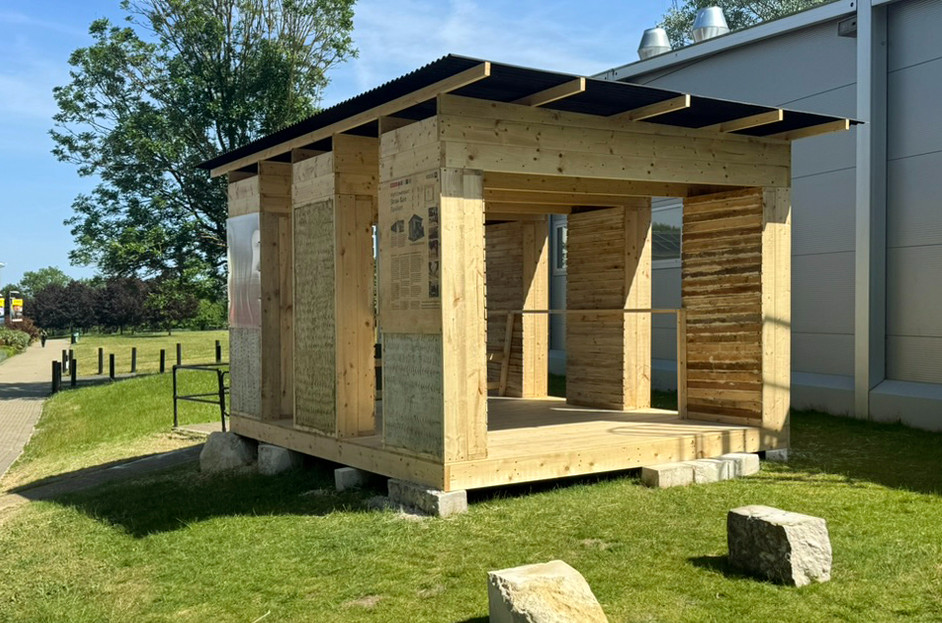
Straw Bale Pavilion
The walls of this bio based pavlion are made from straw bales, a net-positive, carbon-sequestering material that is fire-certified, low-cost, rodent- and insect-resistant, and suitable for multi-storey construction. Straw, an agricultural by-product requiring no extraction and minimal processing, regulates humidity, supports healthy indoor environments, and can return safely to the earth at the end of its life.
The modules of this pavilion meet Passive House standards and can be disassembled and reused.
We demonstrate how low-carbon construction methods can support circular design principles and more sustainable forms of building practice.
This is an experimental Live Project co-designed and co-constructed with students from the School of Architecture+Cities of the University of Westminster led by Maria Kramer with Michael Burchert and Mark Rowe;
The pavilion was conceived as an experimental demonstration of straw bale construction and its potential as a sustainable building method.
Funded by CETI with thanks to our Collaborators: LiveProjectsPractice, Steve Webb, Nicholas Alexander, The Stone Masonry Company, Margent Form, the Harrow Estate Team;